Wind-driven embers
Embers can travel far ahead of the main fire. They may collect in gutters, decks, vents, mulch, dry leaves and other receptive fuels near a structure.
Wildfire Knowledge
Embers, heat and flame contact
Four exposure pathways
Embers, heat and connected fuels can threaten different parts of a structure at the same time.
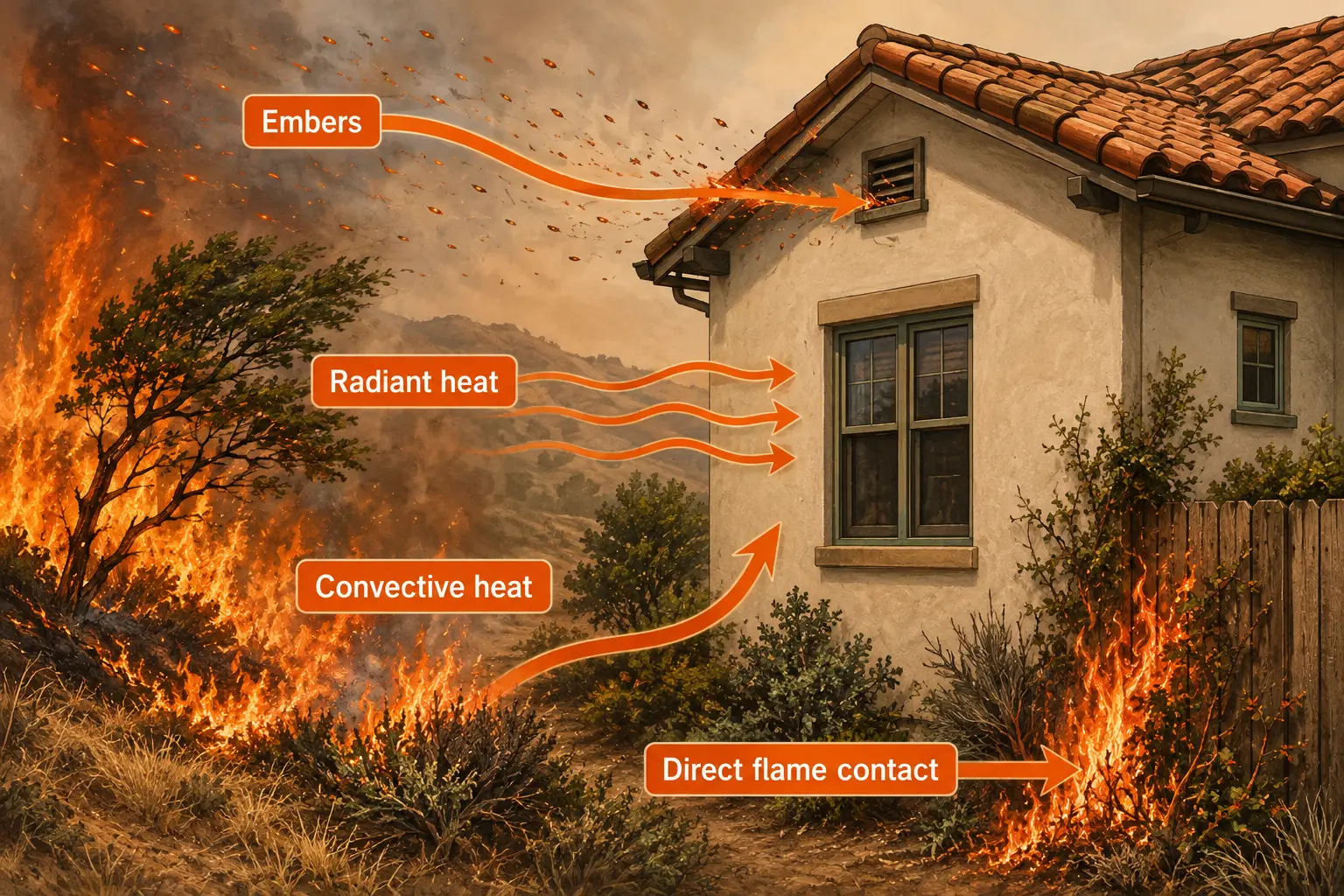
Embers can travel far ahead of the main fire. They may collect in gutters, decks, vents, mulch, dry leaves and other receptive fuels near a structure.
Radiant heat moves outward from flames and can preheat nearby materials. Greater separation and lower fuel intensity can reduce this exposure.
Hot gases and flame movement can carry heat upward and with the wind. Slopes and vegetation arrangement can influence this pathway.
Grass, brush, fences, decks, stored material or other connected fuels can provide a direct route for flames to reach a building.
Combustible material immediately next to a structure can allow small embers or flames to become a structure fire. Vegetation management near the building should be coordinated with home-hardening measures.
Start with an instant preliminary estimate or schedule a free on-site assessment.