Business Licensed & Insured • Free On-Site EstimatesCall or text (619) 915-9663

Plant identification

Native & invasive plants of Southern California.

Recognize common vegetation and understand how maintenance, density and placement affect defensible space.

Southern California plant library

Every plant includes practical management guidance.

A plant is not automatically safe or hazardous based on its name alone. Dead material, spacing, moisture, density and distance from structures all influence fire behavior. The library combines TerraFuego field references and selected plant-identification images. Each image can be replaced with original TerraFuego field photography as the project library grows.

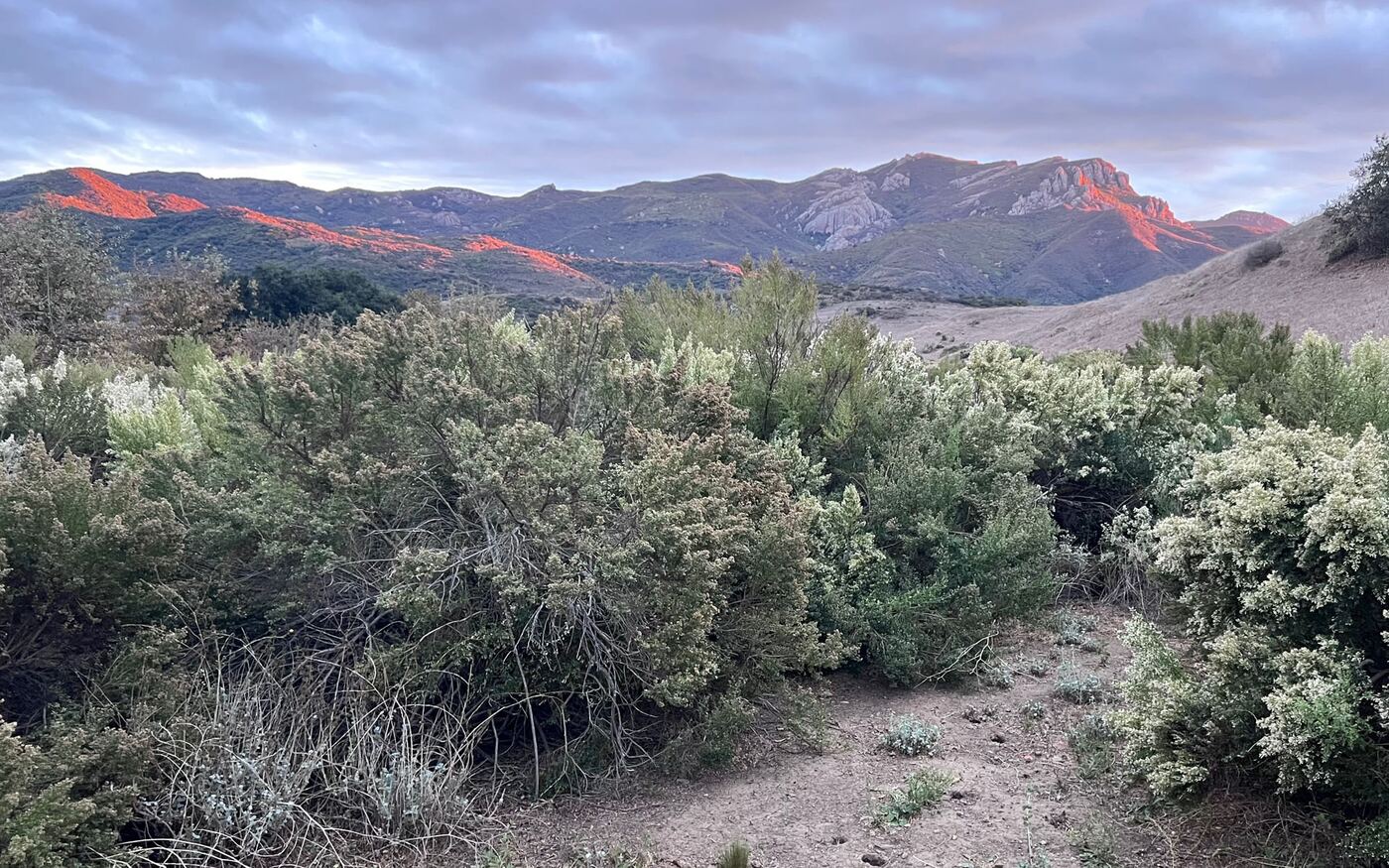
Coyote Brush (Baccharis pilularis) reference photograph
California native

Coyote Brush

Baccharis pilularis

Evergreen native shrub common on slopes, coastal scrub and disturbed ground. It supports pollinators and wildlife, but older plants can become woody and congested.

Fire behavior

Dense growth and dead interior twigs can increase available fuel, especially when plants are crowded or unmanaged.

Management considerations

Thin crowded stems, remove dead material and maintain separation from structures and overhanging trees.

TerraFuego Recommendation

Preserve healthy plants where practical, but selectively thin mature stands and remove dead growth to improve spacing.
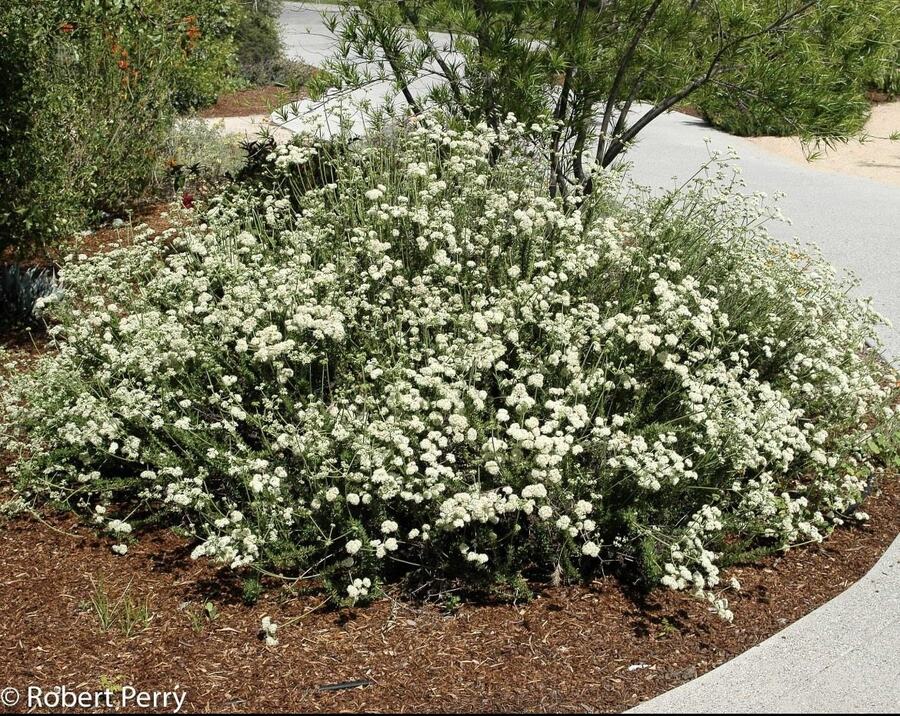
California Buckwheat reference photograph
California native

California Buckwheat

Eriogonum fasciculatum

A drought-adapted native shrub with narrow leaves and clusters of flowers that are valuable to bees, butterflies and other wildlife.

Fire behavior

Dry flower heads and accumulated dead stems can ignite readily late in the season if not maintained.

Management considerations

Prune lightly after flowering, remove dead stems and avoid allowing plants to form an unbroken mass near structures.

TerraFuego Recommendation

Retain healthy specimens as part of a maintained native landscape while removing dead material and preserving clear spacing.

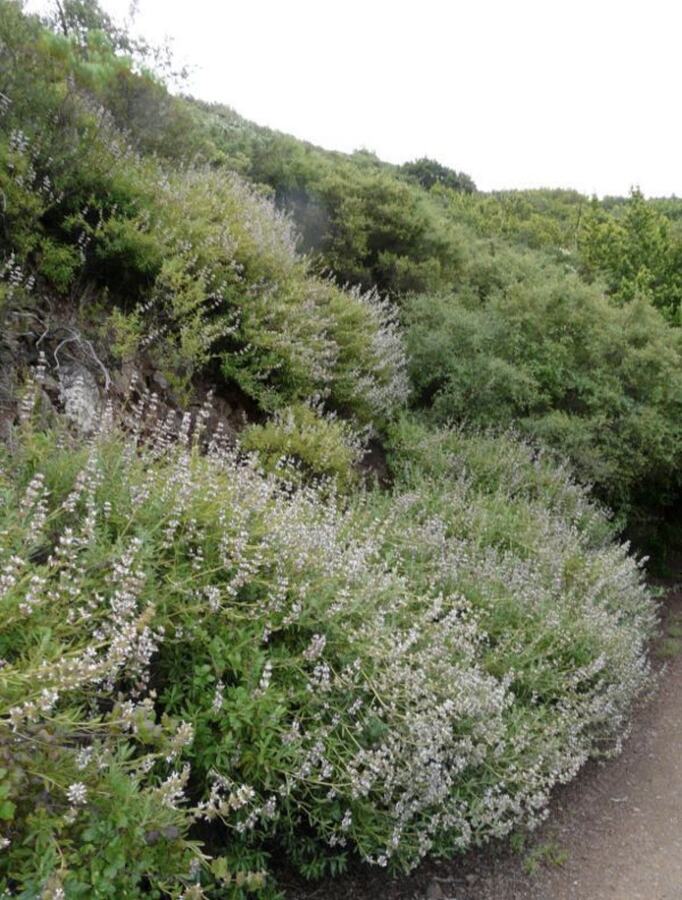
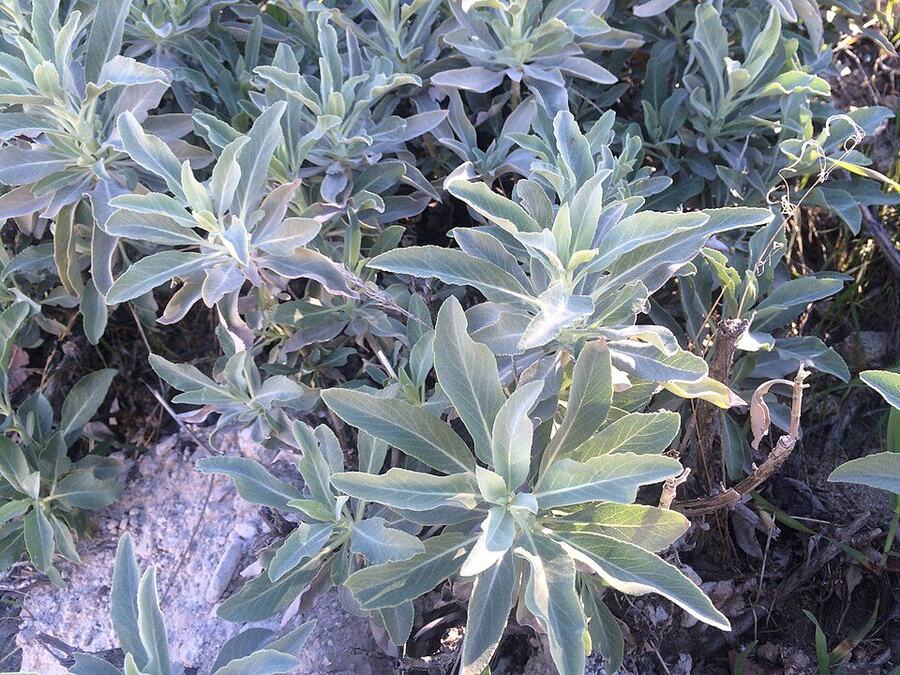
White Sage reference photograph
California native

White Sage

Salvia apiana

Aromatic native sage with pale foliage and tall flower stalks. It is an important pollinator plant and is well adapted to Southern California drought.

Fire behavior

Aromatic oils, dry flower stalks and woody interior growth can contribute to rapid fire spread when plants are dense or neglected.

Management considerations

Remove spent stalks and dead wood, keep plants separated and avoid placing mature shrubs directly against buildings.

TerraFuego Recommendation

Use white sage selectively in defensible landscapes and maintain it through seasonal pruning and litter removal.

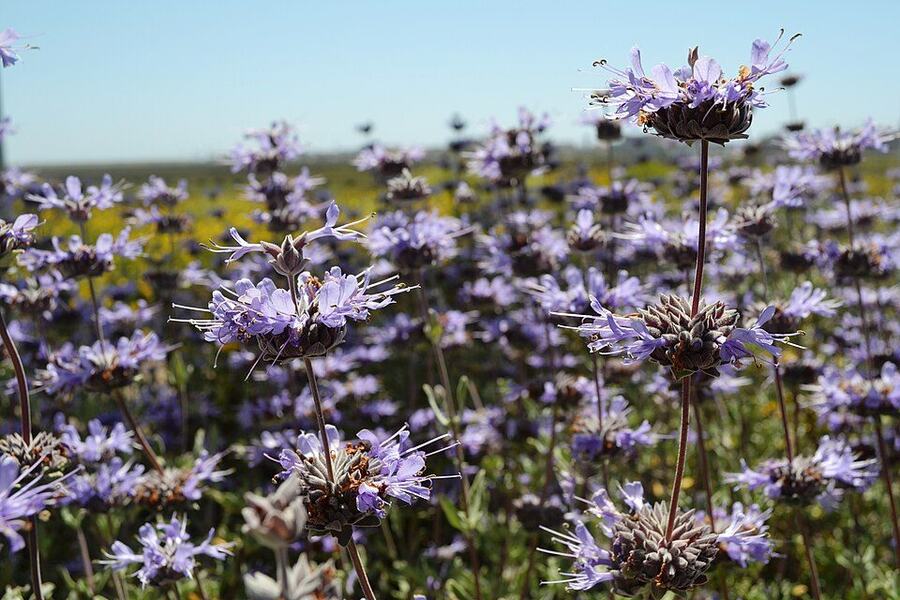
Black Sage reference photograph
California native

Black Sage

Salvia mellifera

A common chaparral and coastal-sage-scrub shrub with dark green aromatic leaves and pale flower clusters.

Fire behavior

Mature plants can become woody, resinous and dense, creating continuous fuel where stands are not thinned.

Management considerations

Reduce density, remove dead interior branches and maintain breaks between shrubs and tree canopies.

TerraFuego Recommendation

Preserve healthy plants away from structures, but thin dense stands and control ladder-fuel connections.

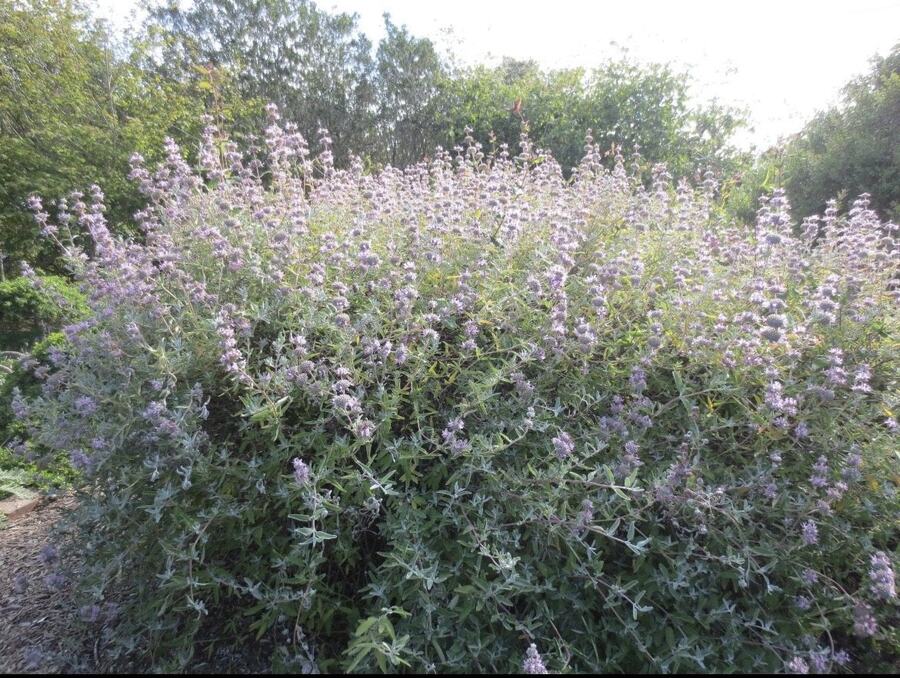
Purple Sage reference photograph
California native

Purple Sage

Salvia leucophylla

A gray-green native sage known for lavender flowers and a broad, spreading form. It performs well in dry landscapes.

Fire behavior

Dry stems and aromatic foliage can burn intensely when plants are oversized or crowded.

Management considerations

Prune for air movement, remove old flowering stalks and keep mature plants well separated from structures.

TerraFuego Recommendation

Keep as a managed native accent rather than allowing it to form continuous unmanaged cover.

Cleveland Sage reference photograph
California native

Cleveland Sage

Salvia clevelandii

A fragrant Southern California native shrub with showy purple-blue flowers, commonly used in drought-tolerant landscaping.

Fire behavior

Its aromatic foliage and dry woody interior can add fuel when the plant is allowed to become large and congested.

Management considerations

Shape after flowering, remove dead wood and maintain generous spacing from buildings, decks and fences.

TerraFuego Recommendation

A good native landscape plant when routinely maintained and not planted as a dense hedge next to structures.

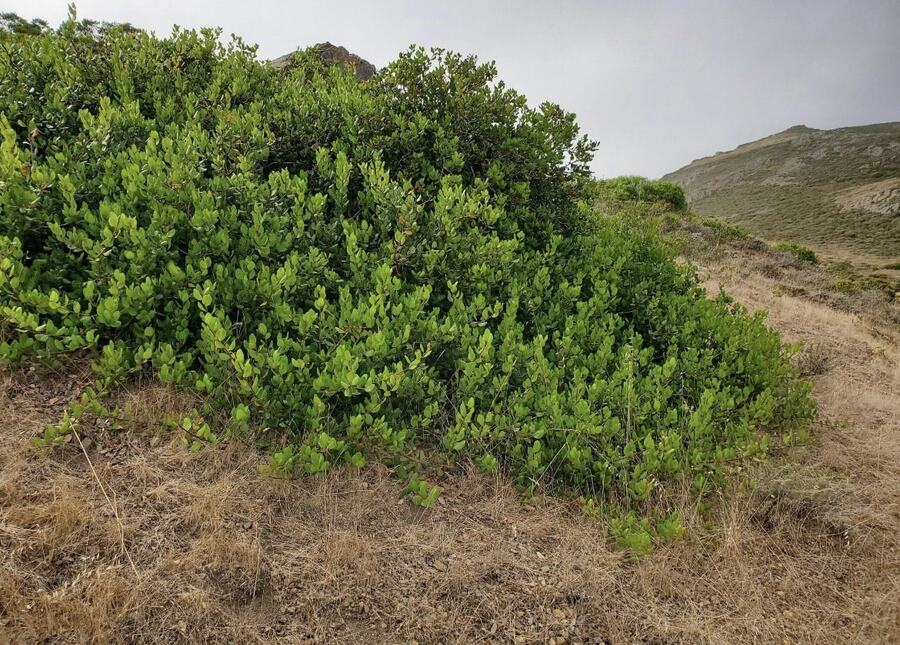
Laurel Sumac reference photograph
California native

Laurel Sumac

Malosma laurina

A large evergreen native shrub or small tree with leathery leaves, frequently found on warm slopes and canyon edges.

Fire behavior

Large plants can create substantial vertical fuel and may act as ladder fuels beneath taller trees.

Management considerations

Raise and thin canopies carefully, remove dead limbs and prevent continuous vegetation from ground level into overhead crowns.

TerraFuego Recommendation

Retain healthy, well-positioned plants but reduce ladder-fuel connections and excessive canopy density.

Lemonade Berry reference photograph
California native

Lemonade Berry

Rhus integrifolia

A broad evergreen shrub native to coastal Southern California, valued for erosion control, screening and wildlife habitat.

Fire behavior

Dense canopies and accumulated dead twigs can carry fire, especially in continuous hedges or unmanaged thickets.

Management considerations

Thin selectively, remove dead interior growth and maintain clearance from roofs, eaves and combustible fencing.

TerraFuego Recommendation

Use as a maintained screen with breaks and canopy spacing rather than as an uninterrupted mass near structures.

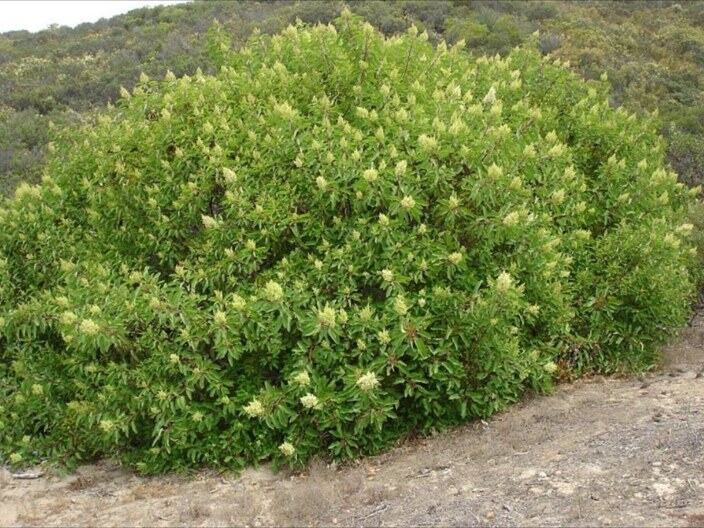
Toyon reference photograph
California native

Toyon

Heteromeles arbutifolia

An evergreen native shrub or small tree with white flowers and red winter berries that support birds and other wildlife.

Fire behavior

Well-maintained plants can remain relatively clean, but neglected specimens may accumulate dead wood and connect surface fuels to tree canopies.

Management considerations

Prune out dead limbs, raise lower branches where needed and remove combustible growth beneath the canopy.

TerraFuego Recommendation

Preserve healthy toyon whenever practical and manage its structure so it does not become a ladder fuel.

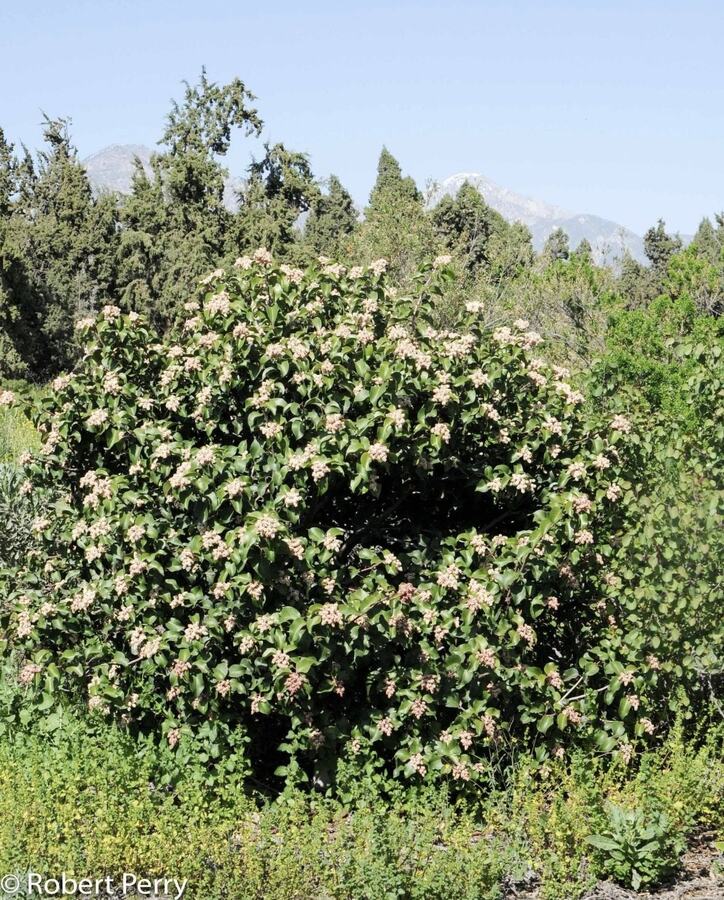
Sugar Bush reference photograph
California native

Sugar Bush

Rhus ovata

A durable evergreen shrub with thick leaves, pink flower clusters and red fruit, native to inland and foothill areas.

Fire behavior

Large, dense plants can hold dead interior twigs and create heavy shrub fuel if left unmanaged.

Management considerations

Thin old stems, remove dead material and provide separation from neighboring shrubs and structures.

TerraFuego Recommendation

Retain healthy sugar bush in appropriate locations while reducing mass and maintaining visible spacing.
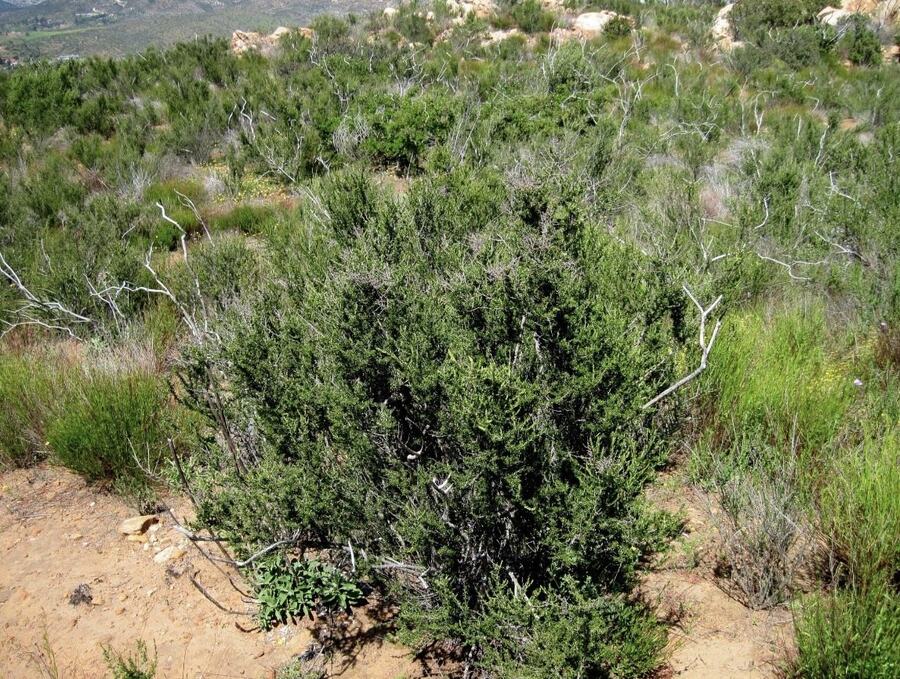
Chamise reference photograph
California native

Chamise

Adenostoma fasciculatum

A dominant chaparral shrub with small resinous leaves and many fine branches. It is highly adapted to fire-prone landscapes.

Fire behavior

Fine branching, resinous foliage and dense stands can support rapid, high-intensity fire behavior.

Management considerations

Avoid retaining dense chamise close to structures; thin widely, remove dead wood and break up continuous stands.

TerraFuego Recommendation

Near homes, prioritize strong spacing and substantial fuel reduction; removal may be appropriate in the most critical zones.

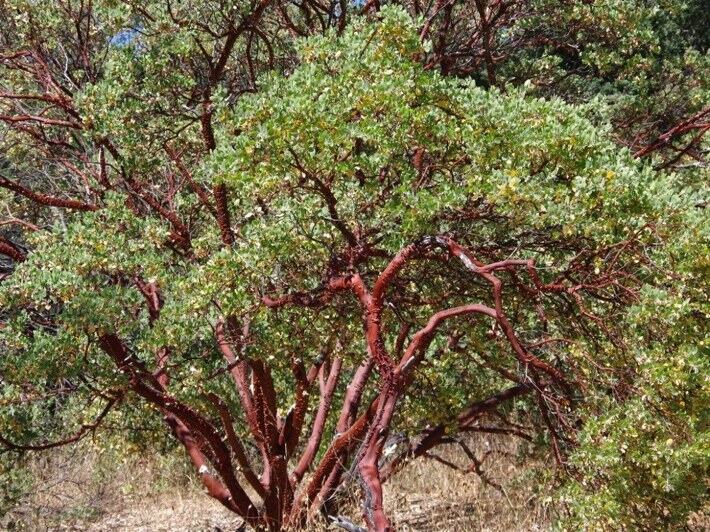
Manzanita reference photograph
California native

Manzanita

Arctostaphylos species

A group of native evergreen shrubs and small trees recognized by smooth red bark and urn-shaped flowers.

Fire behavior

Many species contain fine branches and volatile oils, and old plants can accumulate dead interior wood.

Management considerations

Remove dead wood carefully, lift low branches where appropriate and maintain wide spacing from structures and adjacent vegetation.

TerraFuego Recommendation

Preserve healthy specimens in suitable locations, but do not allow them to form dense continuous fuels near buildings.

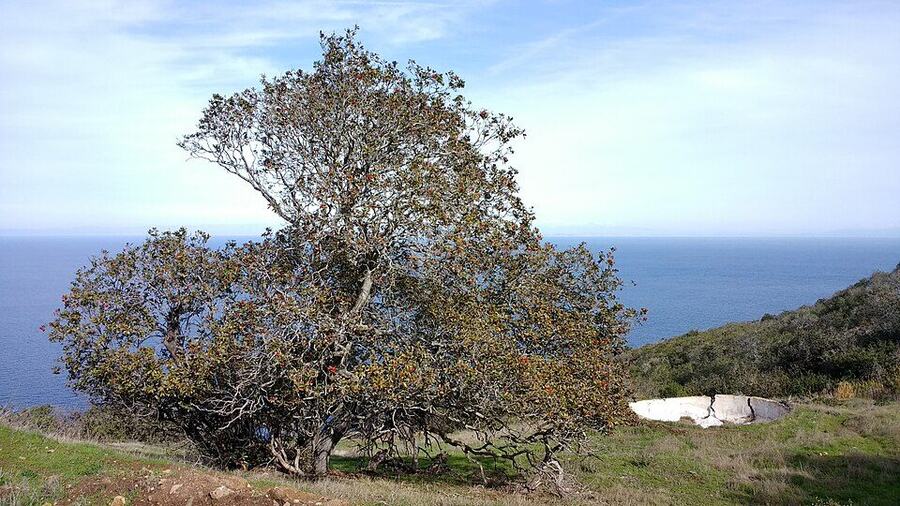
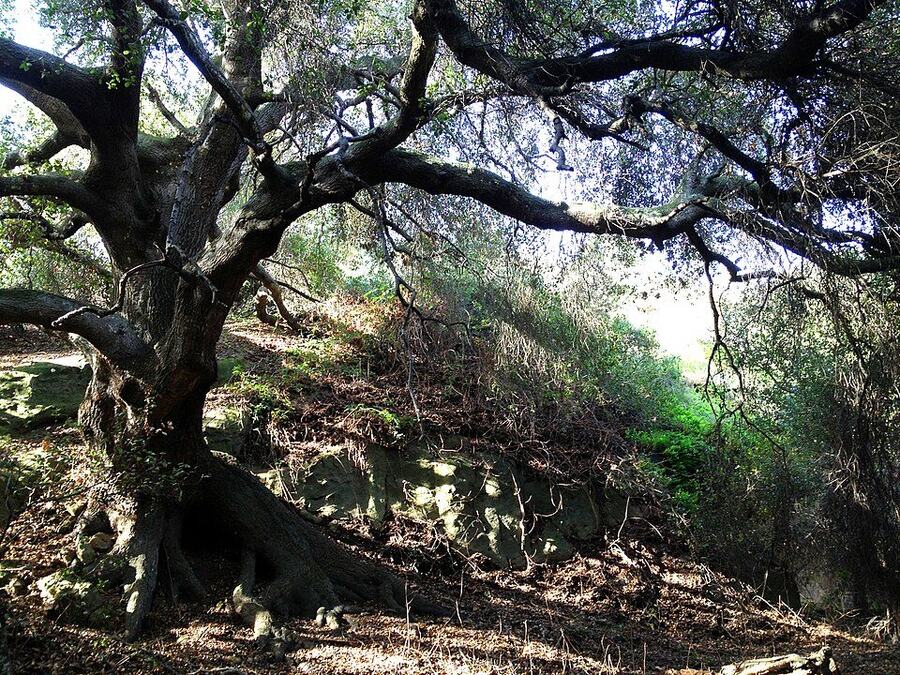
Coast Live Oak reference photograph
California native

Coast Live Oak

Quercus agrifolia

A long-lived evergreen oak native to coastal California and one of the region’s most valuable habitat trees.

Fire behavior

The canopy itself is often retained, but dead limbs, leaf litter and shrubs beneath it can create ladder fuels and ember traps.

Management considerations

Remove dead branches with qualified care, reduce combustible understory and avoid damaging roots or over-pruning the crown.

TerraFuego Recommendation

Preserve healthy mature oaks whenever possible and focus on understory clearance, deadwood removal and proper arboricultural care.

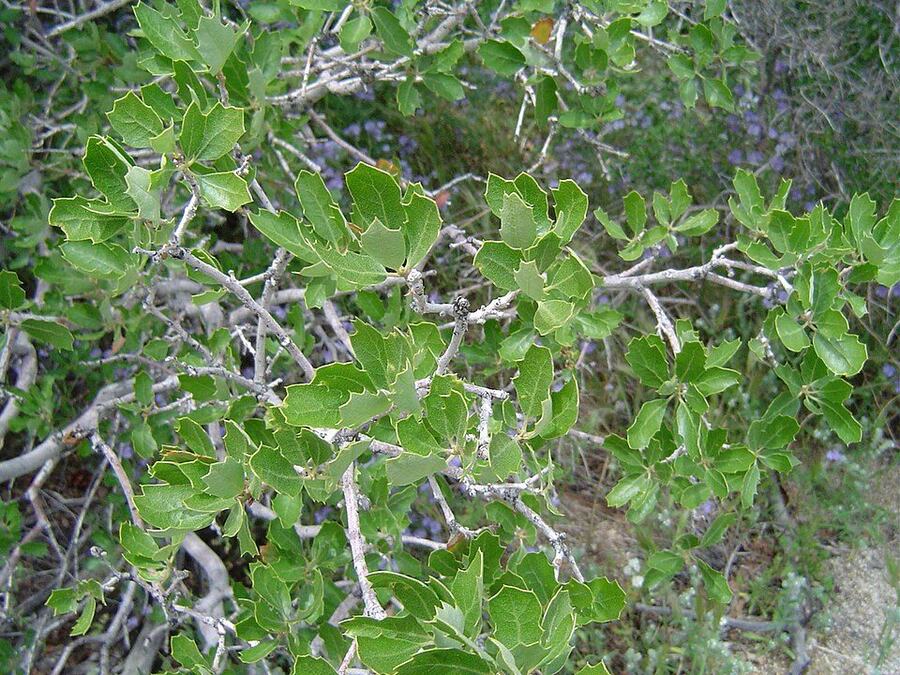
Scrub Oak reference photograph
California native

Scrub Oak

Quercus berberidifolia

A dense native shrub oak common in chaparral and foothill environments. It can form large multi-stemmed thickets.

Fire behavior

Dense branching and dry interior material can create heavy fuel and connect ground fire to taller vegetation.

Management considerations

Thin multi-stem growth, remove dead wood and create breaks between thickets and structures.

TerraFuego Recommendation

Manage selectively where feasible, but reduce or remove dense stands within critical defensible-space areas.

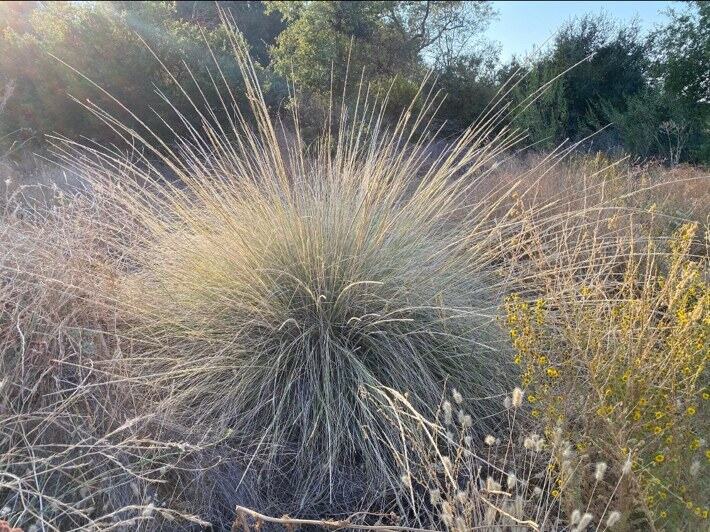
Deer Grass reference photograph
California native

Deer Grass

Muhlenbergia rigens

A large clumping native bunchgrass with arching leaves and tall flowering stems, often used in water-wise landscapes.

Fire behavior

Old dry blades can accumulate inside the clump and burn rapidly if not cut back and cleaned out.

Management considerations

Remove dead foliage and spent stems seasonally, divide oversized clumps and keep plants away from combustible walls and fences.

TerraFuego Recommendation

A useful native grass when regularly cleaned and spaced; neglected clumps should be cut back before peak fire season.

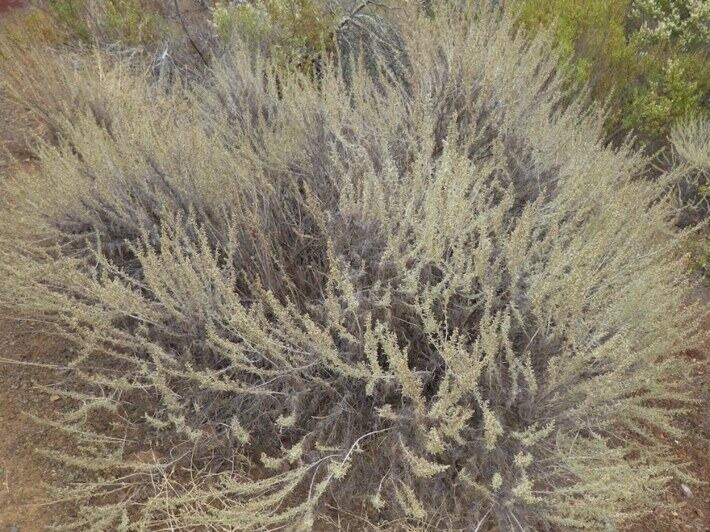
California Sagebrush reference photograph
California native

California Sagebrush

Artemisia californica

A soft, aromatic native shrub with fine gray-green foliage, common throughout coastal sage scrub.

Fire behavior

Fine foliage and aromatic oils can support quick ignition, particularly when plants are dry, dense or mixed with dead annual grass.

Management considerations

Thin stands, remove dead material and maintain separation from structures and other shrubs.

TerraFuego Recommendation

Retain selectively outside the most critical zones and prevent continuous cover from developing.

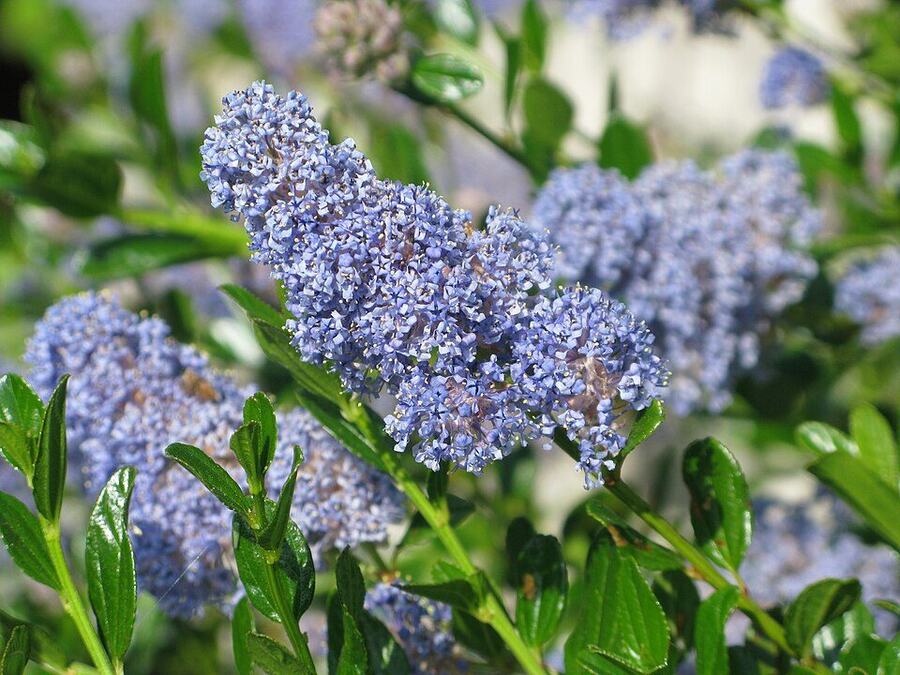
Ceanothus / California Lilac reference photograph
California native

Ceanothus / California Lilac

Ceanothus species

A diverse group of native shrubs known for blue or white flowers and high wildlife value.

Fire behavior

Mature plants may contain fine twigs, oils and dead interior wood, with risk varying by species and maintenance.

Management considerations

Avoid severe topping, remove dead wood selectively and maintain adequate spacing from structures and adjacent crowns.

TerraFuego Recommendation

Preserve healthy plants in appropriate locations while managing density and accumulated dead material.

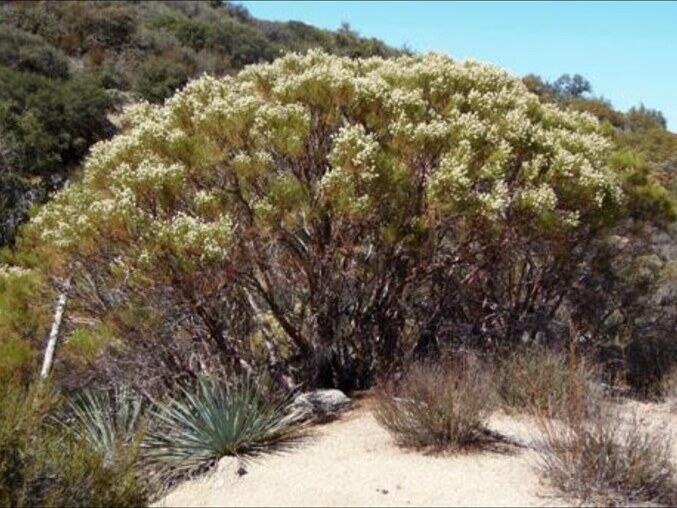
Red Shank reference photograph
California native

Red Shank

Adenostoma sparsifolium

A tall chaparral shrub with reddish peeling bark and fine foliage, common in inland mountain and foothill areas.

Fire behavior

Tall, open crowns can still carry intense fire and create ladder fuels when growing beneath trees or near structures.

Management considerations

Thin lower growth, remove dead branches and maintain significant separation from buildings and overhead canopies.

TerraFuego Recommendation

Treat as a substantial woody fuel near homes and use wide spacing or removal in high-priority defensible-space areas.

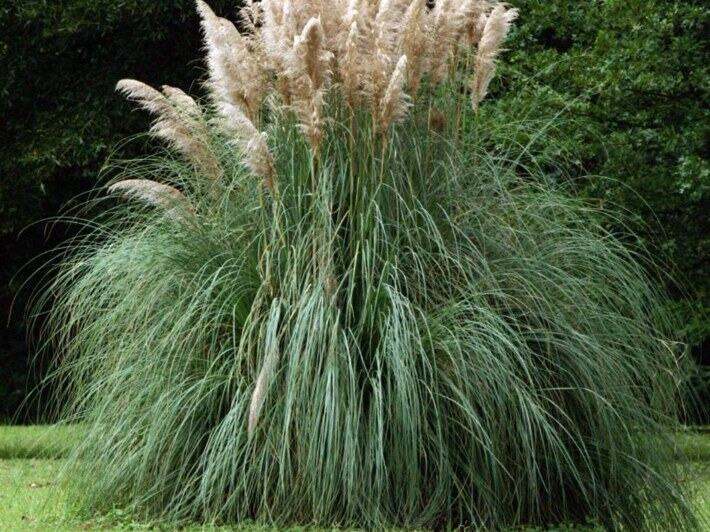
Pampas Grass reference photograph
Invasive / problem plant

Pampas Grass

Cortaderia species

A large ornamental grass with sharp leaves and tall plumes. It escapes cultivation and can establish in disturbed areas and drainages.

Fire behavior

Dense clumps accumulate large amounts of dry thatch that can ignite quickly and burn with tall flames.

Management considerations

Remove entire crowns and roots where feasible; repeated follow-up may be required to control resprouting and seedlings.

TerraFuego Recommendation

Removal is usually the best long-term choice near homes, roads and evacuation routes.

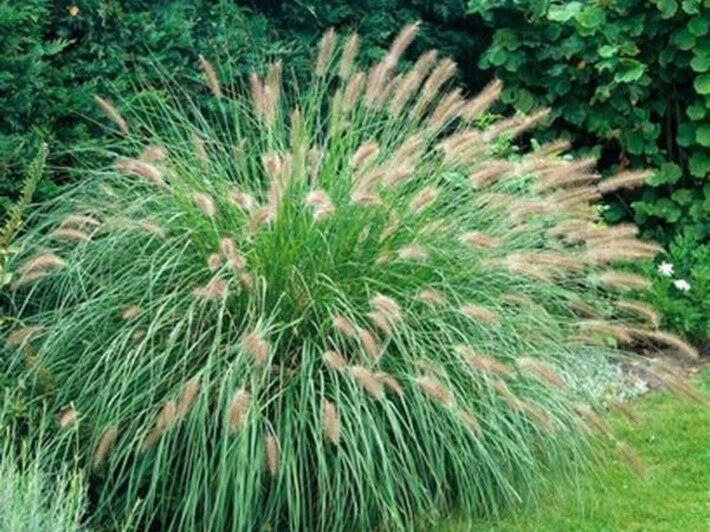
Fountain Grass reference photograph
Invasive / problem plant

Fountain Grass

Cenchrus setaceus

A perennial bunchgrass with arching leaves and bottlebrush flower spikes, often spread from ornamental plantings.

Fire behavior

Dry leaves and seed heads create flashy fuel that can spread fire rapidly across slopes and disturbed ground.

Management considerations

Dig out crowns, remove seed heads before transport and monitor the site for new seedlings.

TerraFuego Recommendation

Remove from defensible-space areas and replace with a lower-fuel, non-invasive alternative.

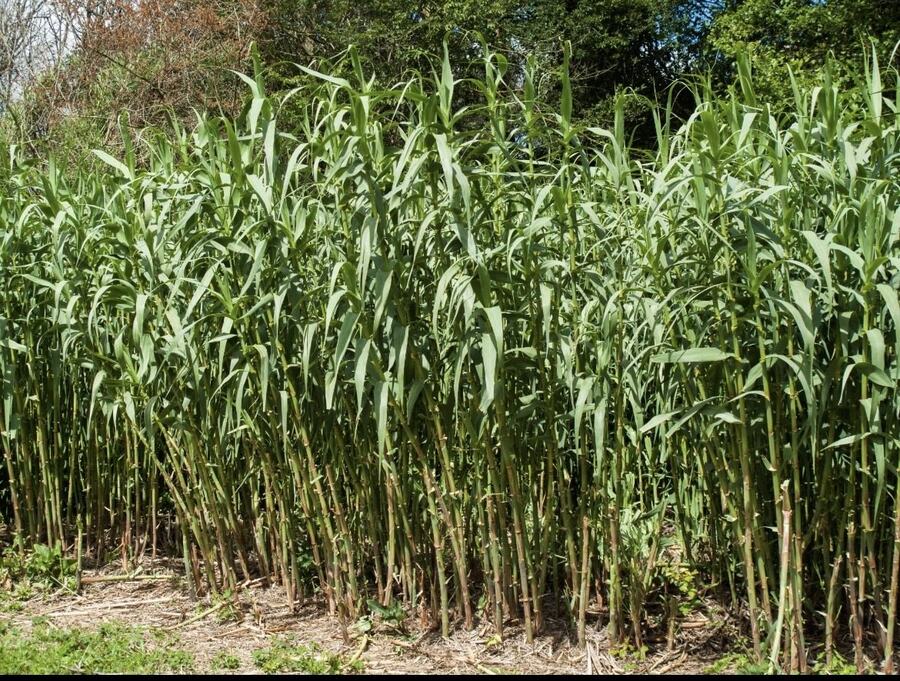
Giant Reed / Arundo reference photograph
Invasive plant

Giant Reed / Arundo

Arundo donax

A very tall bamboo-like grass that spreads through rhizomes and fragments, especially along waterways and drainage corridors.

Fire behavior

Dry stalks and leaf litter create heavy, vertically continuous fuel capable of producing intense fire behavior.

Management considerations

Control requires cutting and treating regrowth or removing rhizomes under an appropriate management plan; repeated follow-up is essential.

TerraFuego Recommendation

Prioritize professional removal and long-term monitoring, especially near structures, roads and riparian corridors.

Tree Tobacco reference photograph
Invasive / problem plant

Tree Tobacco

Nicotiana glauca

A fast-growing shrub or small tree with blue-green leaves and tubular yellow flowers, common on roadsides and disturbed slopes.

Fire behavior

It can form dense woody growth and contribute ladder fuel where it grows beneath trees or against structures.

Management considerations

Remove before seed production, control resprouts and wear appropriate protection because all parts are toxic if ingested.

TerraFuego Recommendation

Remove from managed properties and monitor disturbed soil for new seedlings.

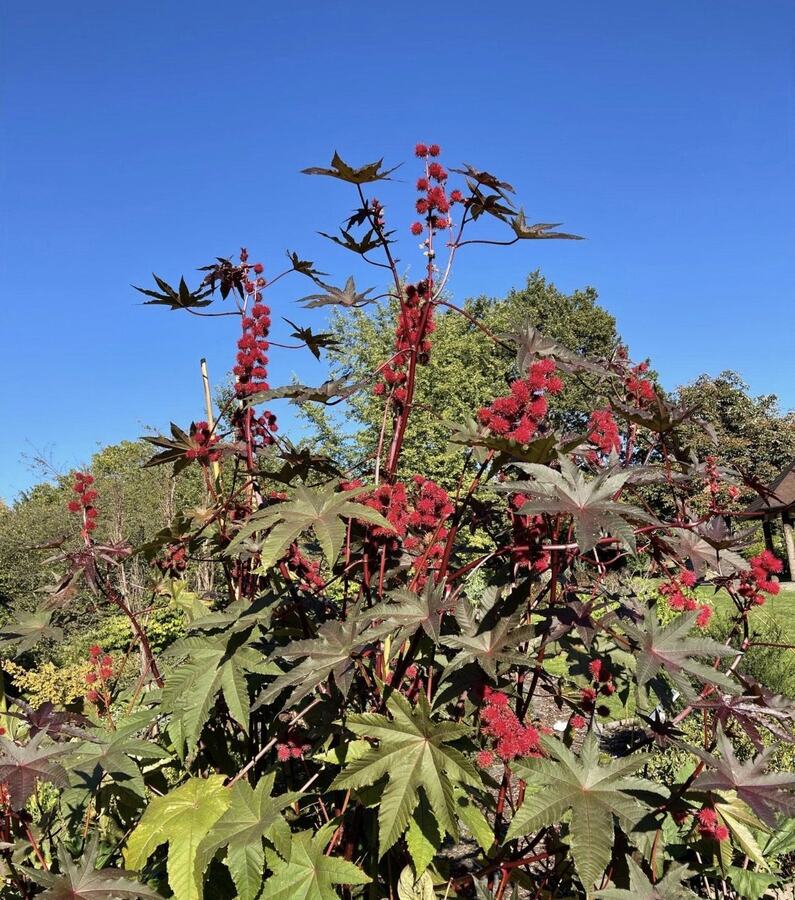
Castor Bean reference photograph
Invasive / problem plant

Castor Bean

Ricinus communis

A tall, fast-growing plant with large palmate leaves and spiny seed capsules, often found in washes and disturbed areas.

Fire behavior

Dead stalks and dense seasonal growth can add substantial dry fuel; seeds are highly toxic if ingested.

Management considerations

Remove plants before seeds mature, collect seed capsules carefully and monitor for recurring seedlings.

TerraFuego Recommendation

Remove from properties, particularly where children, pets, drainage areas or repeated disturbance are present.

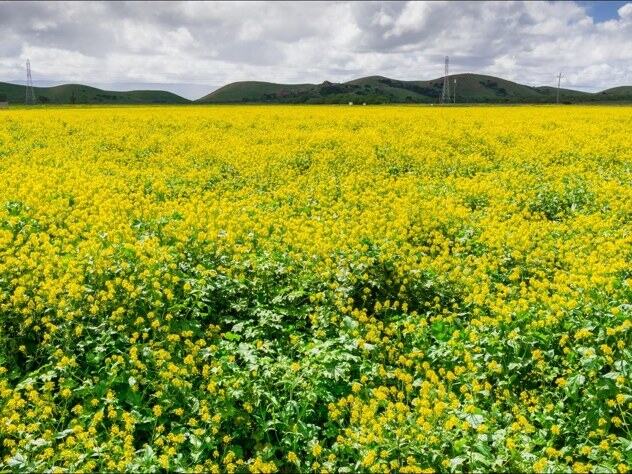
Black Mustard reference photograph
Invasive annual

Black Mustard

Brassica nigra

A tall annual mustard that forms dense yellow-flowered stands after winter rains and then dries completely.

Fire behavior

Its dry stalks create continuous flashy fuel that can carry fire rapidly across open ground and into shrubs.

Management considerations

Cut or mow before seed set when conditions and regulations allow, remove excessive biomass and repeat control annually.

TerraFuego Recommendation

Manage early each season and prevent dry mustard from forming uninterrupted fuel beds around structures and access roads.

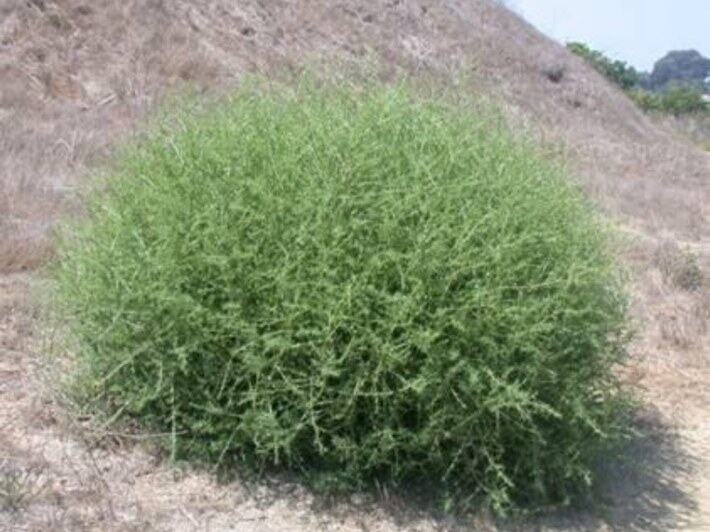
Russian Thistle reference photograph
Invasive annual

Russian Thistle

Salsola tragus

A fast-growing annual weed that forms a rounded, highly branched plant and may break free as a mature tumbleweed.

Fire behavior

Once dry, the fine branching ignites readily. Windblown tumbleweeds can accumulate against fences and structures or carry burning material across roads and fuel breaks.

Management considerations

Remove plants before seed set, clear accumulated tumbleweeds promptly and monitor disturbed soil for new seedlings.

TerraFuego Recommendation

Prioritize early-season control and remove mature dry plants from structures, roadways, fences and access routes.

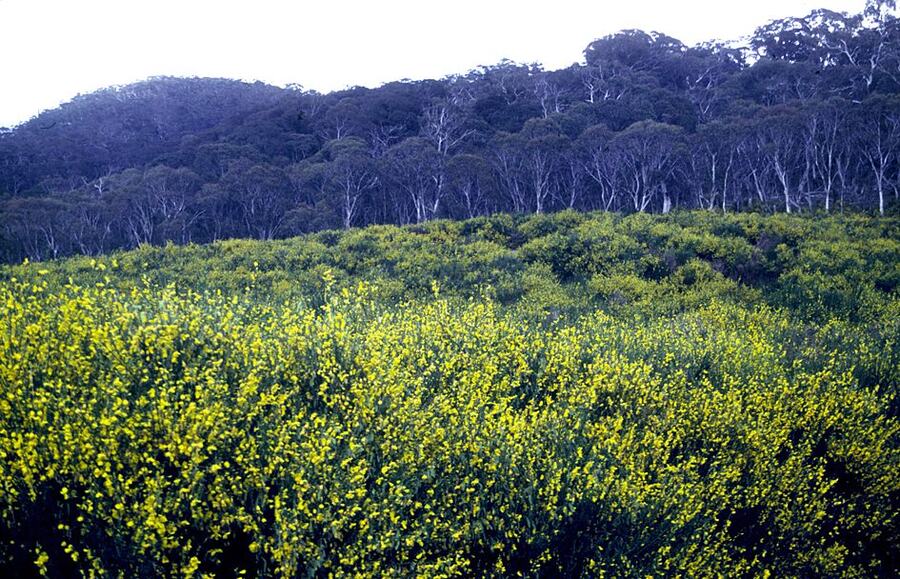
Scotch Broom reference photograph
Invasive plant

Scotch Broom

Cytisus scoparius

A woody shrub with bright yellow flowers that invades disturbed sites, roadsides and mountain areas.

Fire behavior

Dense stems and fine branching can create highly flammable shrub fuel and support rapid fire spread.

Management considerations

Remove small plants with roots, treat larger stumps appropriately and monitor the long-lived soil seed bank.

TerraFuego Recommendation

Prioritize complete removal and follow-up rather than repeated cosmetic trimming.

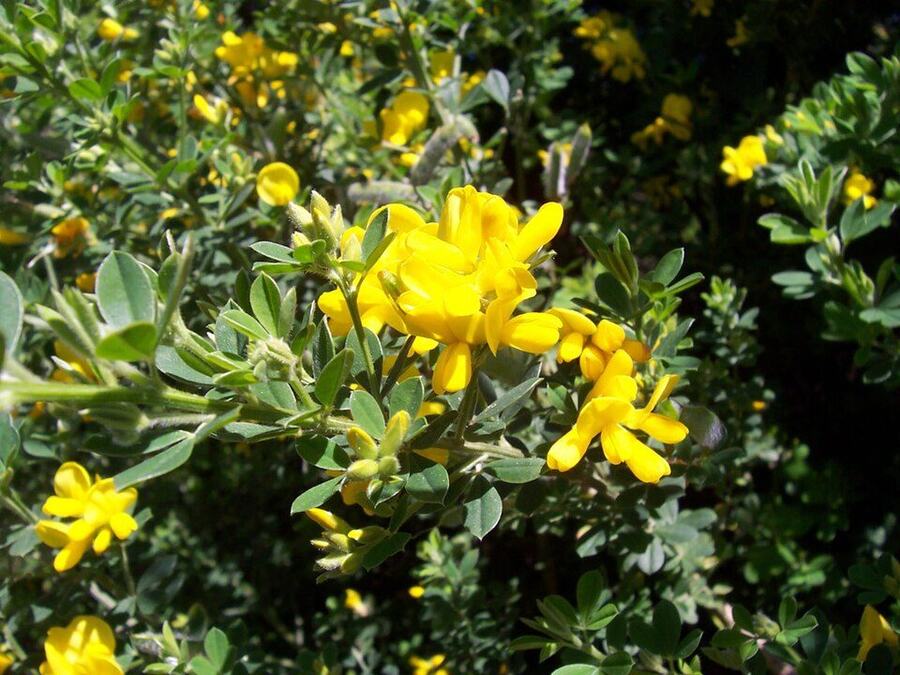
French Broom reference photograph
Invasive plant

French Broom

Genista monspessulana

An evergreen broom with yellow flowers that forms dense stands in disturbed wildland and roadside environments.

Fire behavior

Fine twigs and dense growth create continuous woody fuel and can increase flame length and spread.

Management considerations

Pull seedlings, cut and treat mature plants under an appropriate plan and return for several seasons of follow-up.

TerraFuego Recommendation

Remove infestations early and prevent seed production whenever possible.

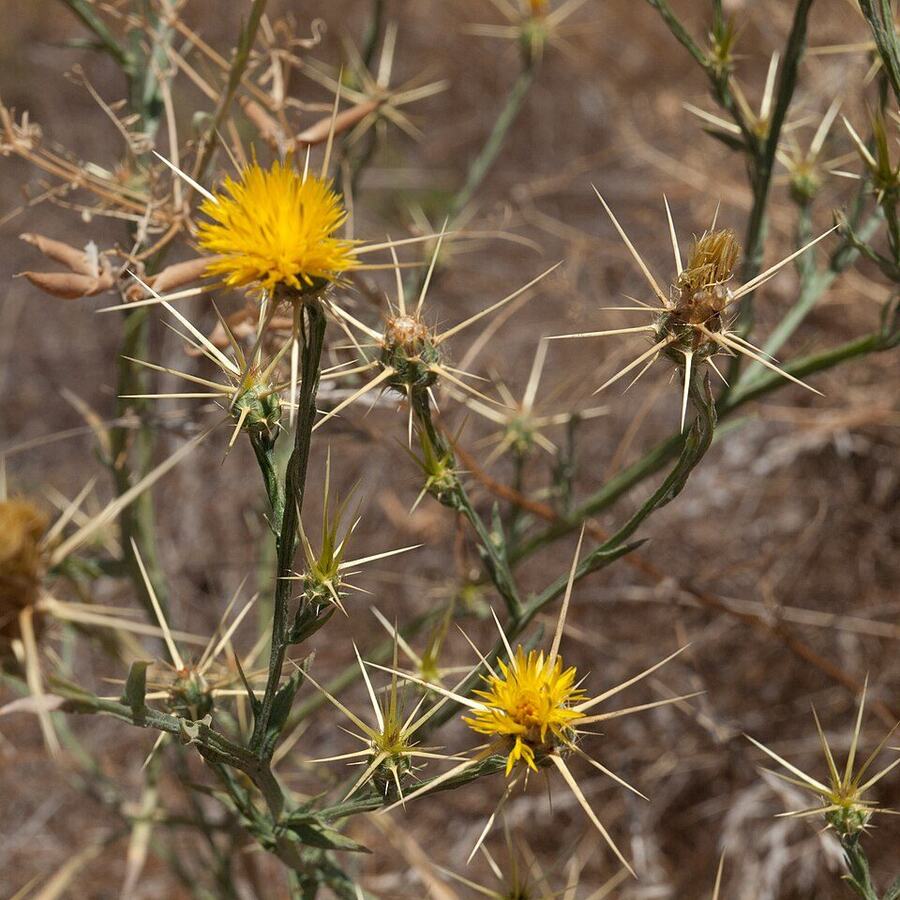
Yellow Star-Thistle reference photograph
Invasive annual

Yellow Star-Thistle

Centaurea solstitialis

A spiny annual with yellow flowers that invades roadsides, fields and disturbed ground.

Fire behavior

When dry, dense stands contribute continuous fine fuel and restrict safe access for people and animals.

Management considerations

Mow or remove before viable seed develops, dispose of seed heads carefully and repeat control over multiple years.

TerraFuego Recommendation

Control early in the season and combine removal with restoration or competitive ground cover where appropriate.

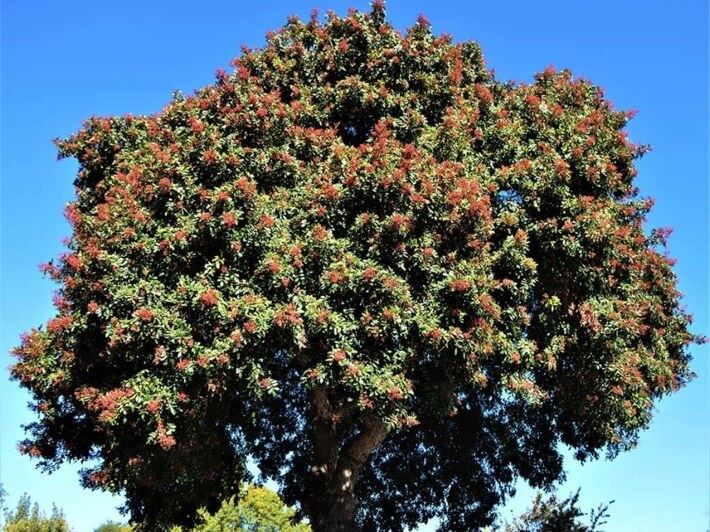
Brazilian Pepper Tree (Schinus terebinthifolia) reference photograph
Invasive plant

Brazilian Pepper Tree

Schinus terebinthifolia

An evergreen shrub or tree that can form dense growth in disturbed areas, canyons and riparian corridors.

Fire behavior

Dense multi-stemmed growth, leaf litter and low branches can create heavy fuel and ladder-fuel conditions.

Management considerations

Cutting alone may trigger resprouting; effective control often requires root or stump treatment and follow-up monitoring.

TerraFuego Recommendation

Use professional removal methods and plan for repeated control of resprouts and seedlings.

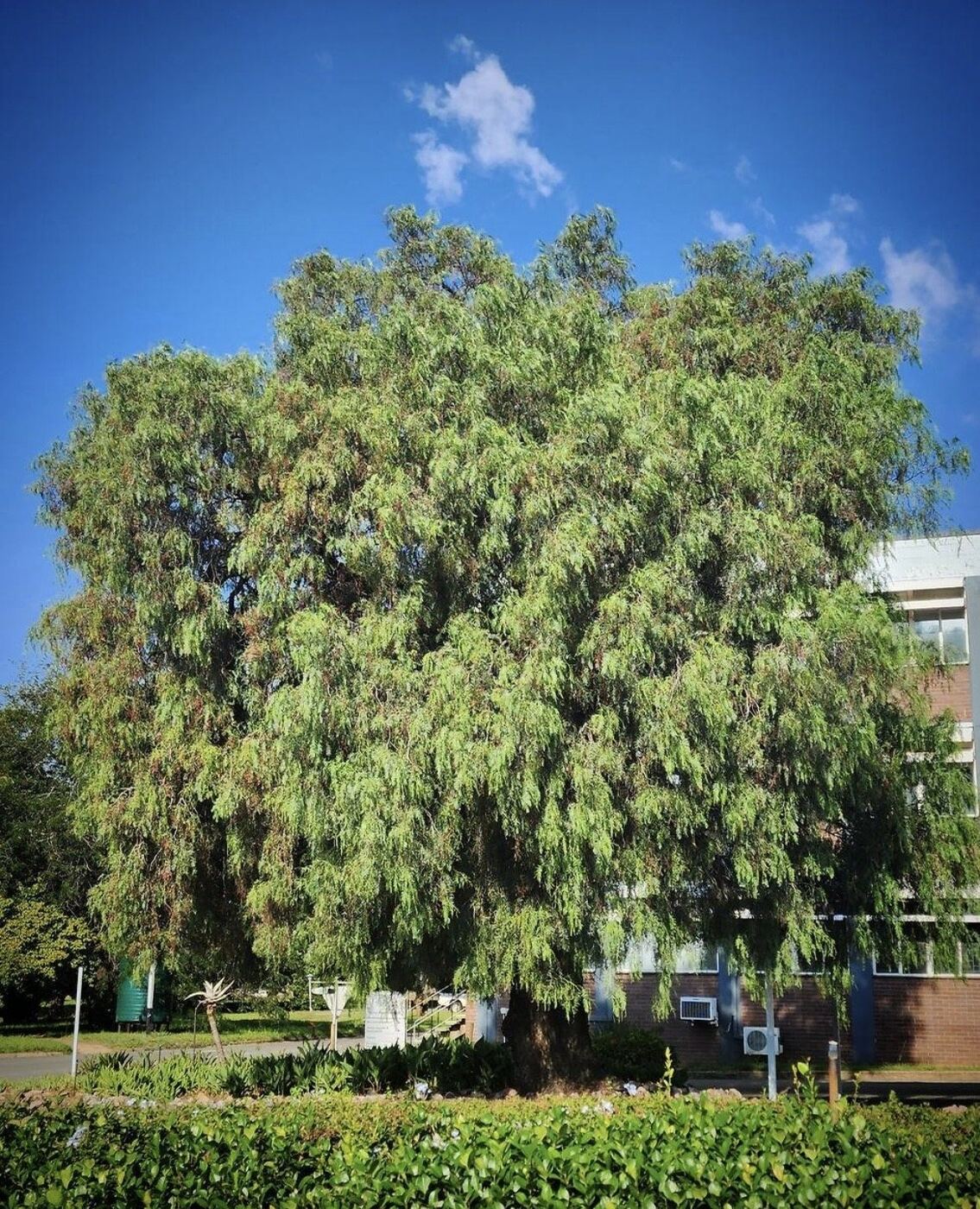
California / Peruvian Pepper Tree (Schinus molle) reference photograph
Non-native tree

California / Peruvian Pepper Tree

Schinus molle

A South American evergreen tree widely planted for its graceful canopy and clusters of pink berries.

Fire behavior

Hanging branches, dry litter and volunteer seedlings can contribute fuel and obstruct access if the tree is not maintained.

Management considerations

Remove deadwood, lift low branches, clear litter and control seedlings or suckers near natural areas.

TerraFuego Recommendation

Maintain healthy landscape specimens with proper clearance; remove poorly placed or invasive growth where it conflicts with defensible space.

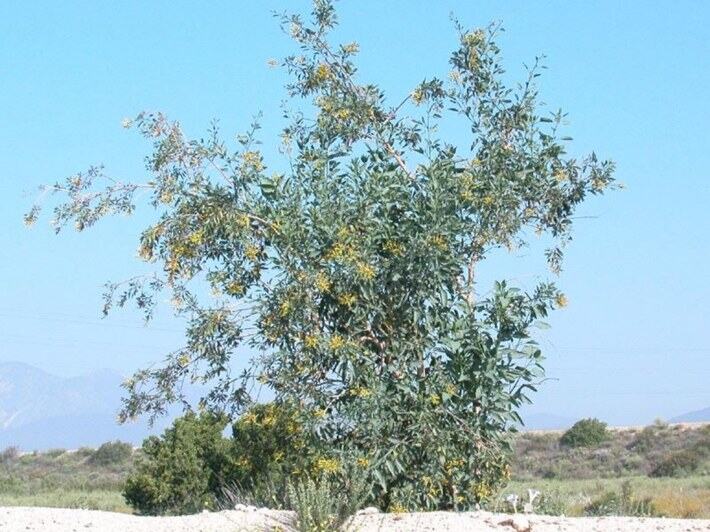
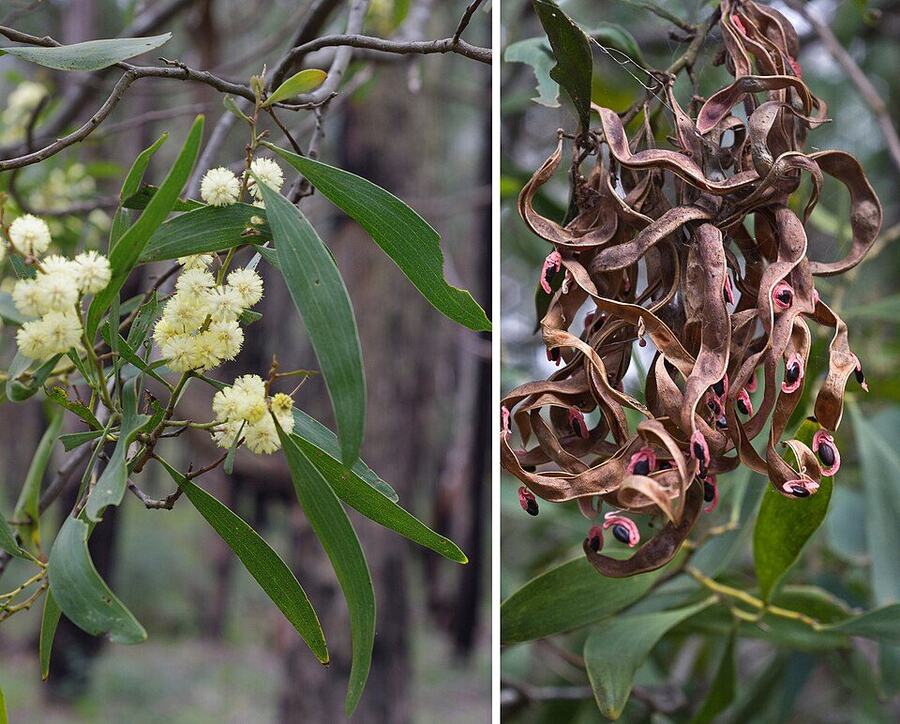
Acacia reference photograph
Non-native / problem group

Acacia

Acacia species

A broad group of fast-growing trees and shrubs, several of which spread aggressively in Southern California.

Fire behavior

Many species produce dense twiggy growth, heavy litter and vigorous resprouts that can create substantial fuel loads.

Management considerations

Identify the species, remove seedlings early and plan for stump treatment or repeated resprout control on mature plants.

TerraFuego Recommendation

Where acacia is dense, invasive or close to structures, removal and long-term follow-up are often preferable to repeated trimming.

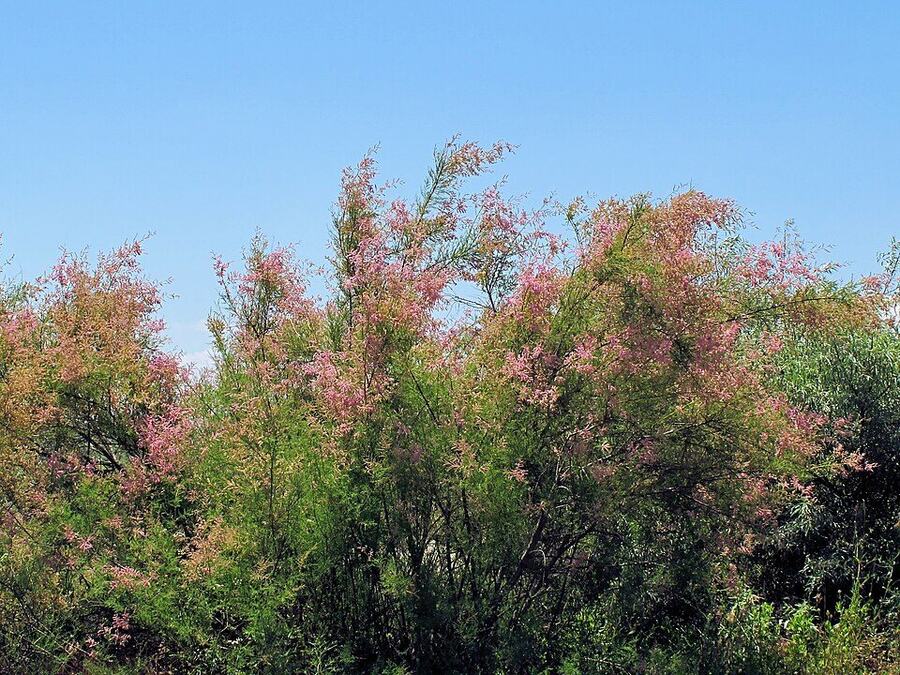
Tamarisk / Salt Cedar reference photograph
Invasive plant

Tamarisk / Salt Cedar

Tamarix species

A salt-tolerant shrub or tree that invades washes, desert waterways and disturbed riparian areas.

Fire behavior

Dense stands can accumulate fine twigs and litter, obstruct access and create continuous fuel along drainage corridors.

Management considerations

Control usually requires cutting with appropriate stump treatment and repeated monitoring for resprouts and seedlings.

TerraFuego Recommendation

Coordinate removal carefully in waterways and plan for restoration and long-term follow-up.

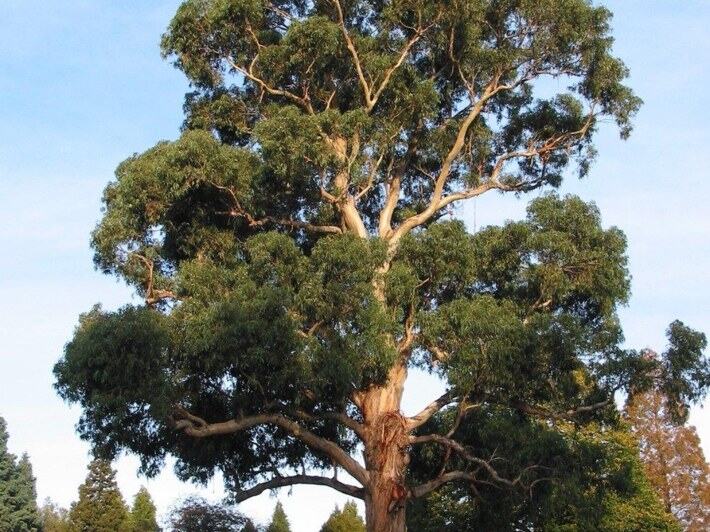
Eucalyptus reference photograph
Non-native tree group

Eucalyptus

Eucalyptus species

A large group of Australian trees widely planted in California. Some species spread into natural areas and produce heavy leaf and bark litter.

Fire behavior

Peeling bark, hanging strips, oily foliage and accumulated litter can generate embers and intense fire behavior when unmanaged.

Management considerations

Remove loose bark and deadwood, reduce litter, separate understory fuels and assess hazardous or poorly located trees with qualified professionals.

TerraFuego Recommendation

Retain only well-maintained trees in suitable locations; prioritize removal where trees create unacceptable clearance, stability or ember hazards.

Important: This guide provides general educational information. Identification, removal methods and legal requirements vary by species, property and jurisdiction. Confirm protected-tree and habitat requirements before work begins.

Not sure what is growing on your property?

Schedule an on-site vegetation assessment with TerraFuego.

Request an Assessment
Temporary reference photographs are locally stored and properly attributed. View photo credits and licenses.