Wildfire Knowledge
Understanding Fire Behavior
Fire tetrahedron, structure exposure and conflagration
The fire tetrahedron
Four elements sustain combustion.
Fire requires heat, oxygen, fuel and a self-sustaining chemical chain reaction. Vegetation management primarily addresses the element property owners can most directly influence: available fuel.
What fuel reduction can do
- Reduce flame length and heat output in managed areas
- Interrupt continuous paths of vegetation
- Reduce ladder fuels beneath tree canopies
- Improve access and working space for firefighters
What it cannot do: guarantee a structure will survive an extreme wildfire.
Structure exposure
A home can ignite without the main flame front touching it.
Wildfire can threaten a structure through wind-driven embers, radiant heat, convective heat and direct flame contact. More than one pathway may act at the same time.
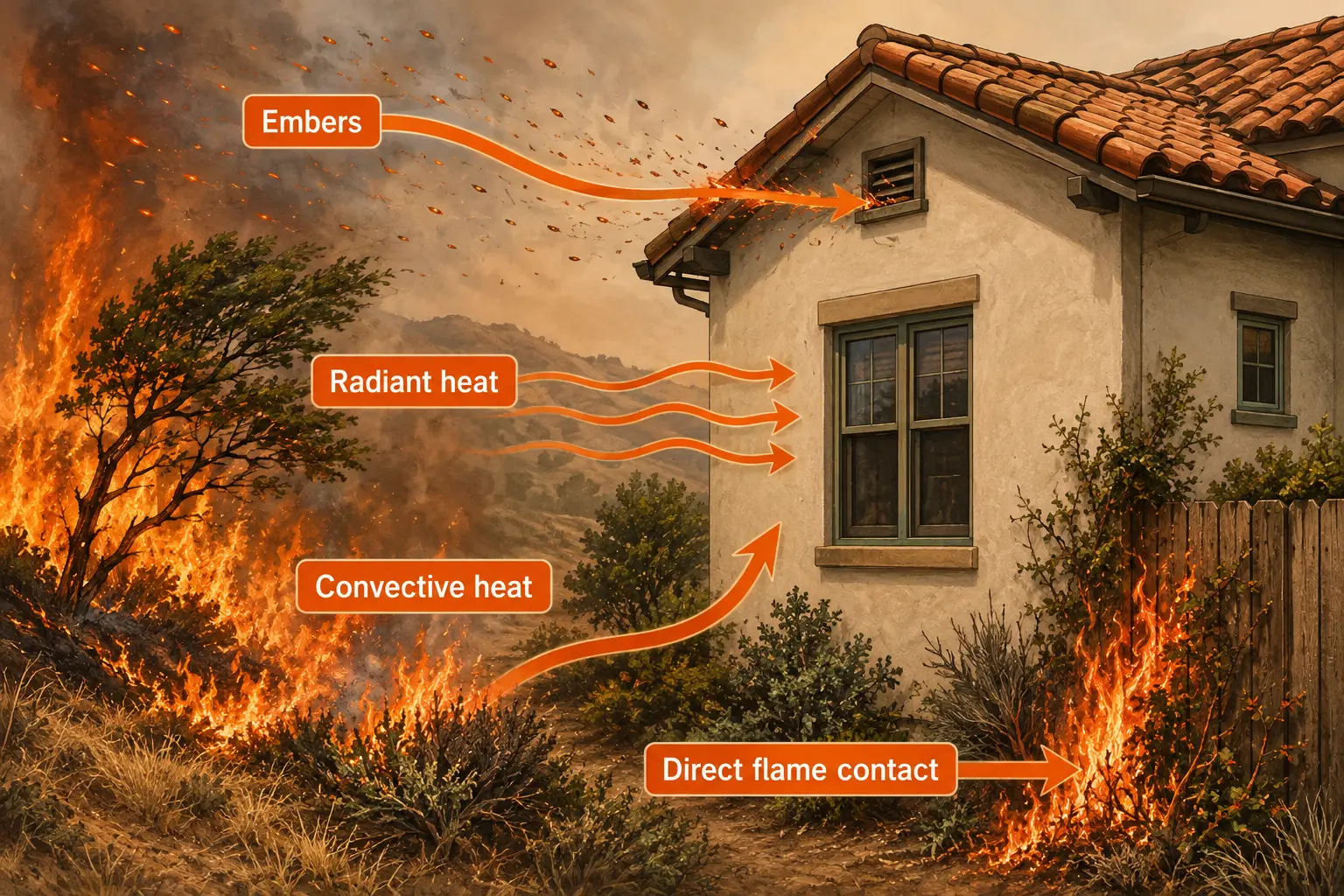
See how each exposure pathway works and why vegetation management should be paired with home hardening.
Explore Structure Exposure →Conflagration
When fire grows beyond ordinary control.
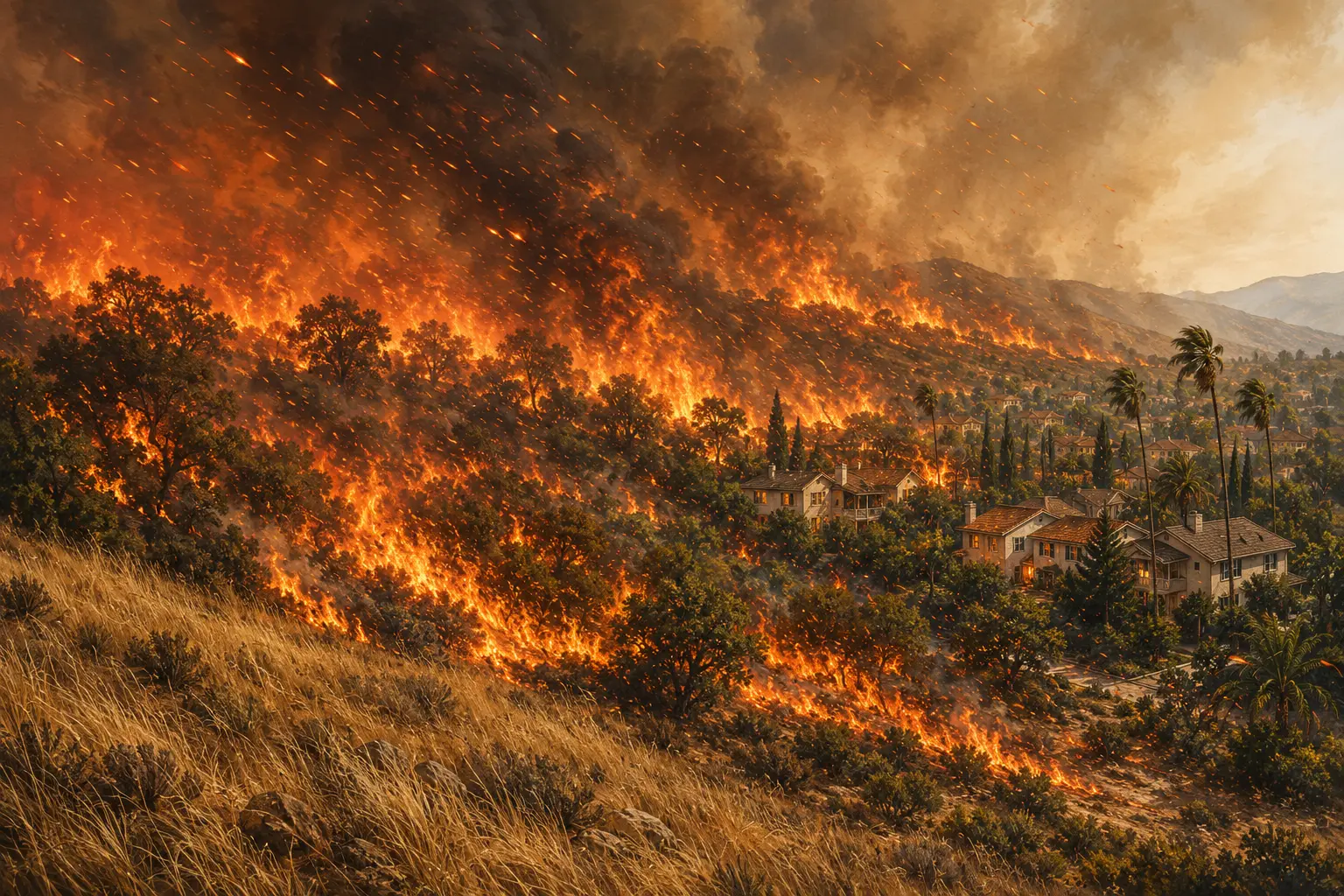
A conflagration is a large, destructive fire that spreads rapidly across many fuel sources and can overwhelm suppression resources. Wind-driven embers, radiant heat, topography and continuous vegetation can all contribute.
Strategic fuel reduction is one layer of risk reduction: it removes or modifies part of the fuel bed so fire has less material available in managed areas. It cannot eliminate every exposure pathway or guarantee a structure will survive an extreme wildfire.
Ready to reduce hazardous vegetation?
Start with an instant preliminary estimate or schedule a free on-site assessment.